
BEEGENETICS
Analysis of the genetic composition of bee colonies
Optimize your selection or conservation programs
thanks to a genetic reference method for
evaluating the hybridization level of your queens or bee colonies.
In collaboration with Beebytes laboratory.

PRINCIPLE OF BEEGENETICS ANALYSIS
The Beegenetics analysis is based on the study of genetic markers called SNPs, distributed throughout the bee genome. These variations make it possible to distinguish the two main European lineages : M (black bee) and C (ligustica/carnica). By identifying the proportion of SNPs specific to each lineage, the analysis provides a score expressed as a percentage of purity for the M lineage. For example, a score of 80% means that 80% of the genetic markers correspond to the M lineage and 20% to the C lineage.
This method provides a reliable indicator of the level of genetic hybridization, essential for programs to select, conserve or manage the genetic diversity of beekeeping flocks.
The analysis is based on the European reference method developed by Alice PINTO (University of Bragança, Portugal), published in Nature Scientific Reports.
What results are achieved?
Depending on your needs, analyses can be carried out on males or workers:
➡️ Analysis of males (drones) : To assess the queen’s genetic purity.
As drones are haploid, they possess only the queen’s DNA. Analysis of the colony’s males thus enables us to determine the queen’s genetic purity. More precisely, the analyses are carried out on drone nymphs (around 15), to ensure that they are indeed the colony’s males.
➡️ Worker analysis : To assess the genetic diversity of the entire colony.
Unlike males, female workers are diploid: half their DNA comes from the queen, the other half from one of the males that fertilized the queen. Analysis of a number of workers gives a more complete picture of the genetic diversity of the entire colony. However, as workers are often half-sisters, this also reflects a complex mosaic of genotypes!
Examples of applications
These analyses may be useful for :
The creation and monitoring of conservatories
In the case of a black bee conservatory, Beegenetics analyses enable you to check that the queens are indeed of the Mellifera subspecies, and to remove queens that are too introgressed from the conservatory. You can also check that your conservatory is sufficiently isolated to avoid fertilization by males of other subspecies.
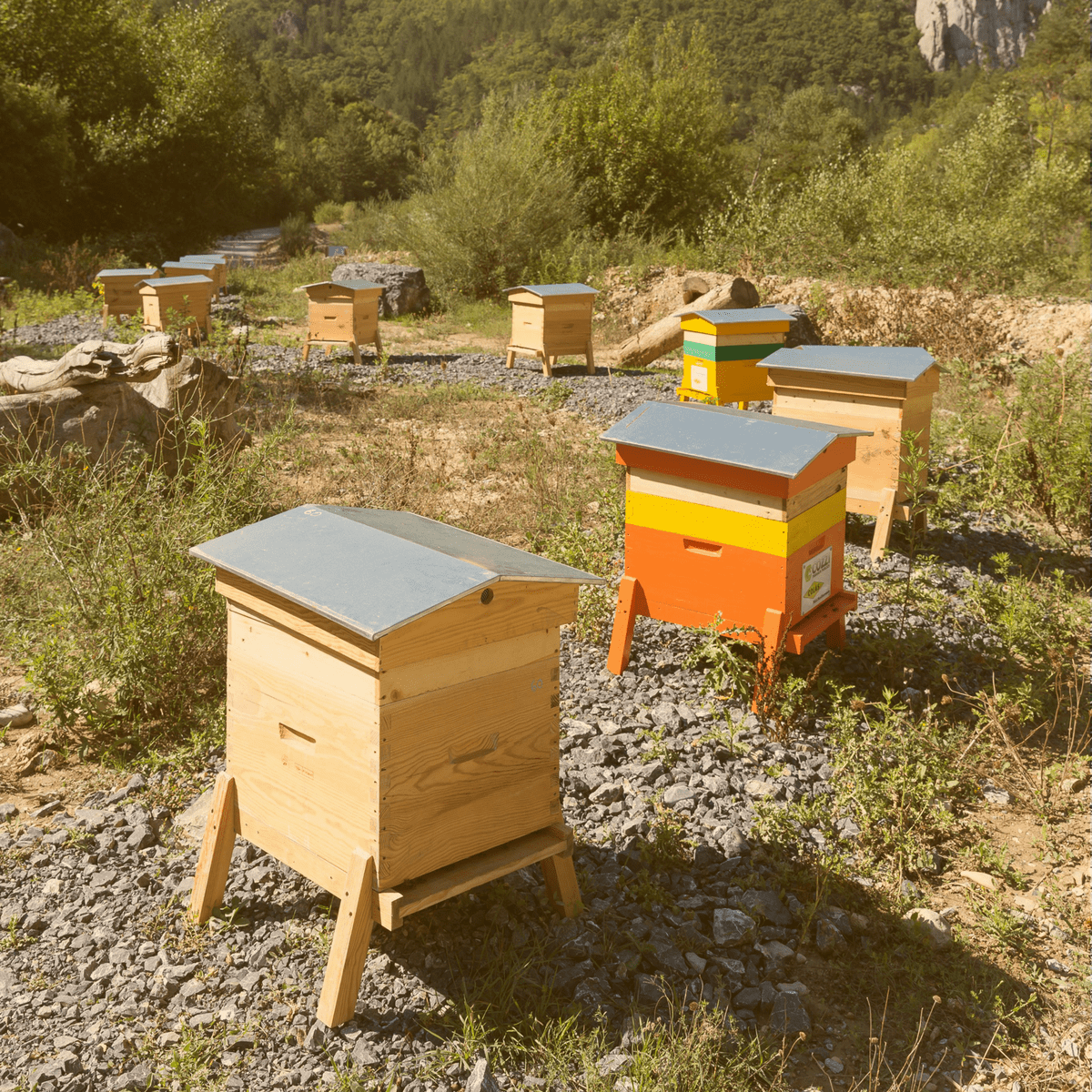
Conservatoire d'abeilles noires
Colas Carrière Cozzi - Norrante (04)
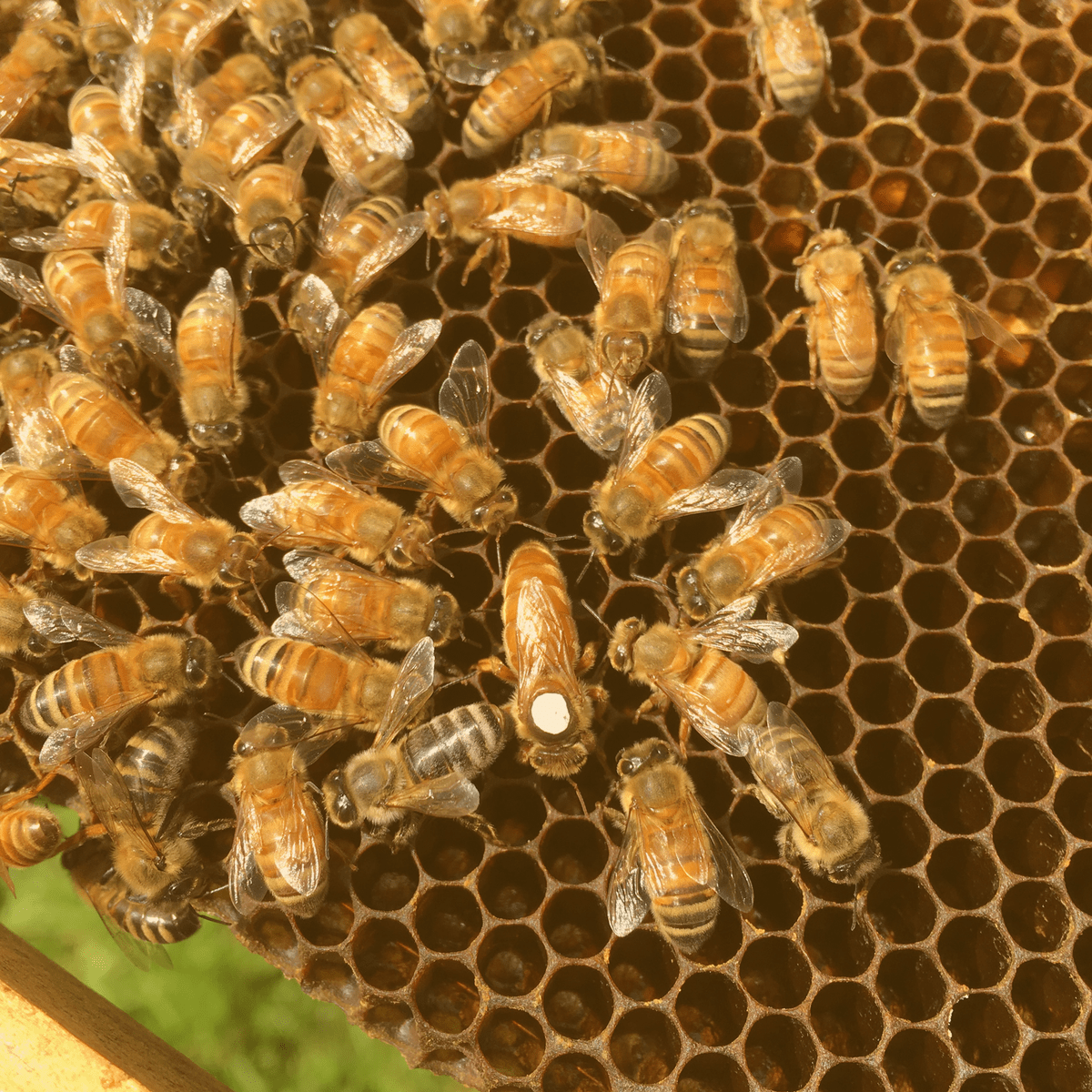
Genetic selection programmes
As part of a genetic selection program, Beegenetics analyses enable you to graft on queens that show little hybridization, and to check the genetic origin of the males that have fertilized the queens. The latter information enables you to control the tightness of your directed fertilization site.
How is sampling carried out?
🧪 BeeGenetics sampling protocol
Sampling is slightly different depending on whether you want to analyze males or workers.
For each colony to be analyzed, sample :
– For males: 1 hind leg from every 15 purple-eyed nymphs
– For workers: 1 antenna from every 50 purple-eyed nymphs
Use the equipment supplied: numbered tube with buffer solution, sampling card and sampling forceps (1 per hive).
Legs or antennae should be immediately immersed in the solution, then leave the tubes to stand for 6-8 h in the fridge before dispatch.
Rates and deadlines
Rates are based on a sliding scale according to the number of analyses requested, whether on males and/or workers:
- 90.00 € including VAT
- 82.80 € including VAT
- 78.00 € including tax
- 73.20 € including tax
Rates include shipment of sample tubes, analysis report and telephone support for interpretation of results.
Analysis lead time: 4 to 6 weeks
We can also offer you a sampling service provided by our technicians, and consulting services for the creation of conservatories or genetic selection programs (on request).